
AS400 Cloud Hosting Explained My Experience and Insights
Have you ever wondered if moving your legacy IBM i systems to managed infrastructure can free your team to focus on growth?
I decided to test that idea firsthand. In my experience, platforms like Racksquared speed deployment for IBM i workloads without tying you to physical limits. Paragon’s dedicated LPARs feel like on-premises systems but add flexible benefits. Connectria stands out as North America’s largest IBM Power managed services provider.
What I learned is simple: offloading hardware upkeep to specialists gives teams time to improve apps and processes. Professional facilities deliver stability and strong performance, while managed services provide the 24/7 support necessary to keep systems up and running.
Effective management of your data and the right partner can be the cornerstone of a successful digital shift. Below I lay out concise lessons from my work and what to look for when evaluating providers.
Key Takeaways
- Dedicated managed services reduce infrastructure burden and boost focus on applications.
- Professional data centers improve stability and long-term performance.
- 24/7 support is essential to maintain uptime for mission-critical systems.
- LPAR-based solutions can mirror on-premises behavior while adding flexibility.
- Choosing the right provider speeds deployment and strengthens data management.
Understanding the Shift to AS400 Cloud Hosting
When companies relocate IBM i resources to managed infrastructure, they gain finer control over performance and cost. I’ve seen providers tailor IBM Power environments so teams avoid hardware surprises.
Connectria lets organizations extend the life of their IBM investment with fully customizable IBM Power resources. That customization gives teams the freedom to size systems to actual demand.
Racksquared removes the need to buy and refresh servers every three to five years. In practice, that means fewer capital cycles and simpler planning for the business.
I’ve watched customers deploy virtual machines in 1/10 processor core increments. This granular approach improves efficiency and reduces wasted power.
- Flexibility: scale IBM Power without physical limits.
- Cost: move from CapEx refreshes to predictable operating expenses.
- Management: simplify data operations while keeping legacy performance.
The primary goal is clear: modernize infrastructure so your legacy systems stay fast, manageable, and aligned with present-day business needs.
Evaluating Performance and Hardware Reliability

To judge infrastructure, I focused on real-world performance and how reliably hardware sustains it.
IBM Power Systems Capabilities
Power10 and Power11 servers deliver consistent throughput under sustained loads. Racksquared runs multiple Power10 and Power11 machines across two data centers to raise availability and reduce single-point failures.
I found that these servers surpass typical industry benchmarks for transaction rates and I/O. Connectria’s model lets teams allocate memory and storage on a per‑GB basis, so you only pay for the resources you use.
Scalability of Virtual Resources
Scalability matters more than raw specs. Virtual memory and storage scale smoothly, which improves cost efficiency and operational agility.
- Performance: Power10/11 hardware pushes higher sustained IOPS and lower latency.
- High availability: advanced SANs and cross-site replication protect critical data.
- Flexibility: virtual resources prevent over‑provisioning of physical hardware.
My review confirms that dedicated system architectures combine traditional reliability with modern agility. Replication across sites is essential for business continuity and peace of mind.
Security Standards and Compliance Requirements

Security and compliance form the foundation for any reliable IBM Power deployment. I always check certifications and controls before shifting mission‑critical workloads offsite.
The right provider documents adherence to global standards that protect sensitive information. Connectria designs its IBM Power data centers to meet PCI, SOC 1 and 2, HIPAA, HITRUST, ISO 27001, GDPR, and CCPA.
Regulatory Compliance Standards
Meeting these regulatory requirements is essential for businesses that handle protected data. These frameworks define controls for access, encryption, and monitoring.
- Security is a top priority; approved controls reduce exposure to unauthorized access.
- Managed services often include built‑in protocols that are tougher than many on‑prem setups.
- Adherence to global standards helps you manage your power and data assets with confidence.
“Certification and constant auditing make compliance a practical part of daily operations.”
In my experience, choosing a partner that meets these rules simplifies audits and lowers risk. It also lets your team focus on running applications, not chasing compliance checklists.
Managing Costs Through an Opex Model
Switching from capital expense cycles to predictable monthly billing changed how I plan IT investments.
I tested providers that let you convert big hardware buys into steady operational fees. Racksquared lets customers move to an opex model so monthly costs stay consistent. Paragon sets fixed monthly charges based on disk, memory, CPU, and user counts.
Predictable pricing for storage and infrastructure makes IT budgets far easier to manage. You avoid buying new servers every few years and can drop expensive maintenance contracts.
- Avoid large upfront hardware purchases: no three‑to‑five year refresh cycle.
- Predictable monthly pricing: clearer view of data and resource use.
- Redirect spend: fund development of new applications instead of upkeep.
“Transparent pricing helped me see exactly what we use and what we pay for.”
In my experience, this opex structure reduces long-term costs and supports steady growth without surprise maintenance bills.
The Role of Managed Services and Expert Support

Having expert teams on call shifts the burden of infrastructure upkeep away from your core staff. In practice, this means fewer surprises and faster incident resolution.
24/7 Monitoring and NOC Support
I’ve seen continuous monitoring catch performance anomalies before they affect users. Providers offer NOC teams that watch systems and network traffic around the clock.
That vigilance keeps business applications stable and predictable.
Performance Optimization
Performance tuning is an ongoing process. Experienced staff analyze metrics, remove bottlenecks, and right‑size resources for better throughput.
Proactive optimization reduces latency and helps you get the most from IBM Power and power systems deployments.
Technical Staff Expertise
Connectria’s fully on‑shore staff of 150+ technical resources shows the scale of expertise available to customers. Paragon’s 24/7 senior access ensures complex issues get immediate attention.
- Dedicated teams deliver deep knowledge of IBM Power and related solutions.
- Outsourcing gives access to specialists without hiring costly internal staff.
- Managed services often include proactive security and network management for a stable data environment.
“Having 24/7 access to an expert support team is the most effective way to ensure long‑term success of data operations.”
Disaster Recovery and High Availability Strategies
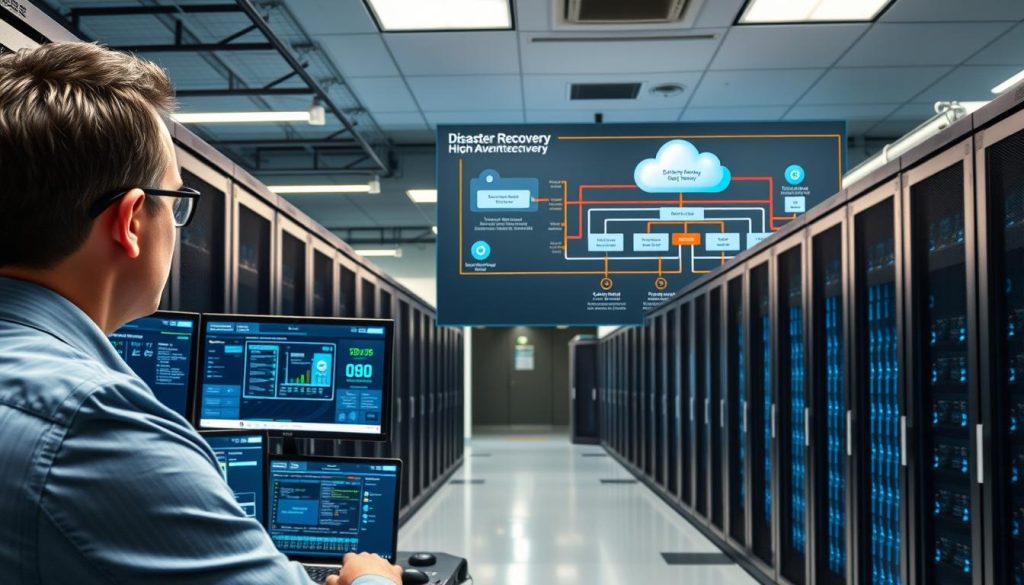
Resilient architectures combine real‑time replication with dedicated recovery partitions. For disaster recovery I look for systems that replicate data continuously and can fail over without manual steps.
Connectria uses high availability cloud architectures with automated backup, failover, and advanced replication to protect production workloads. Paragon goes a step further by keeping a disaster recovery LPAR in a secure, remote data center.
That separation matters. A remote recovery LPAR means the environment can resume quickly if a local disaster makes your primary site unusable.
- Real‑time replication: keeps mirrored copies so recovery is fast.
- Dedicated recovery LPAR: improves availability during an emergency.
- Tested failover: ensures performance remains acceptable under load.
“The performance of your systems during a disaster is tied to the quality of replication and recovery protocols.”
In my experience, planning and regular tests are the most reliable ways to protect ibm power assets and maintain business continuity.
Simplifying System Maintenance and PTF Updates
Keeping IBM Power systems patched should not eat your team’s week every quarter. Automating PTF updates and routine maintenance makes the work predictable and fast.
Racksquared removes the need for customers to ever apply another PTF or operating system update. That means fewer interruptions for your staff and fewer windows of vulnerability.
Automated Patch Management
Paragon applies PTFs to both production and HA LPARs as releases arrive. I’ve seen this approach keep application stacks current and reduce compatibility issues with hardware and drivers.
- Automated patch management, including timely PTFs, simplifies system maintenance.
- Offloading the process saves internal resources and lowers operational risk.
- Consistent updates reduce security gaps and speed recovery after incidents.
“Proactive maintenance is the most effective way to protect long-term stability.”
In my experience, using automated tools ensures every update is applied uniformly. That consistency prevents errors and keeps your systems reliable.
Connectivity and Modernization Potential
When networks deliver sub‑2ms latency between infrastructures, integration becomes far simpler.
I connected an ibm power environment to AWS, Azure, GCP, and Oracle and saw how under 2ms links change development choices.
Low-latency network access makes it practical to run data-intensive applications that rely on modern cloud services.
That responsiveness lets teams build hybrid solutions that combine legacy strength with new capabilities.
- Modernization: you can use existing data to drive AI, IoT, and analytics.
- Integration: applications communicate in near real time across platforms.
- Agility: this foundation lets you adopt new solutions as needs evolve.
In my experience, sub‑2ms links are a game‑changer for businesses that must bridge older systems and modern platforms.
Assessing Your Current Infrastructure Needs
Start with a clear inventory of what your systems actually use today—CPU, memory, and disk tell the real story.
I recommend a detailed review of your ibm power systems and related storage. Racksquared’s questionnaire maps CPW, memory, and disk to your existing server. That data avoids guesswork.
Connectria begins with an initial consultation to align IT goals with business priorities. An expert conversation helps define short‑ and long‑term requirements and expected costs.
Practical steps I follow:
- Measure current resource use for each system and workload.
- Project needs over the next five years to guide pricing and capacity decisions.
- Identify which managed services and staff support will optimize data operations.
My experience shows that working with a skilled team uncovers hidden inefficiencies and produces realistic solutions. A tailored plan reduces surprises and lets your staff focus on value‑add work.
“A thorough assessment builds a customized infrastructure plan that supports growth.”
Conclusion
Shifting system upkeep to specialists clears time for teams to focus on application improvements and business goals.
I found that as400 cloud hosting is a strategic move that brings the flexibility and performance modern firms need.
By using professional cloud hosting, you gain experienced support and robust disaster recovery options that protect critical data.
Offloading infrastructure management lets your staff prioritize features and users instead of servers. Combined high availability and proactive disaster plans keep systems resilient during unexpected events.
Assess your current needs, run a focused cost comparison, and test a pilot. I encourage you to explore these solutions to simplify operations and cut long‑term costs.