Why I Choose Hybrid Cloud Hosting Los Angeles Today
I often ask myself: can a modern mix of on-site systems and public platforms give my business both speed and control?
My answer is a clear yes. I choose a hybrid cloud approach today because I need scalable infrastructure that grows with my business. Crimson IT, with over 15 years of expert support, helps keep critical systems running while I adopt efficient cloud computing services.
I rely on hybrid cloud hosting Los Angeles to balance performance and security. This setup lets me integrate on-premise hardware with managed services for peak performance and practical cost control.
Local experts handle the heavy lifting so I can focus on daily operations. The result is a stable, secure platform that gives me the flexibility I want and the control I need.
Key Takeaways
- I picked this model for scalable infrastructure that supports growth.
- Crimson IT provides local, experienced support for stability.
- The approach blends on-site control with modern cloud services.
- It keeps critical systems operational while improving efficiency.
- This choice balances performance, security, and cost for my business.
Why I Prioritize Hybrid Cloud Hosting Los Angeles
What matters most to me is predictable performance and local, rapid support. My team at Crimson IT has served over 160 businesses, so I choose solutions that match real operational needs.
I prioritize this technology because it delivers clear cost benefits. It helps me control IT costs without cutting service quality or reliability.
Working with local experts gives me responsive support today. The dedicated team understands the unique Los Angeles market and provides services tailored to my business needs.
The provider model I picked balances on‑site hardware with cloud scalability. These services give me the right mix of performance, security, and manageable costs so my business stays competitive.
- Proven support: 160+ regional businesses served.
- Cost control: predictable spending and lower overhead.
- Practical benefits: scalable solutions and local expertise.
Balancing Local Control with Cloud Scalability

I design systems that keep critical workloads near me while allowing growth on demand. I use private cloud reliability to keep sensitive data secure, and public flexibility to scale my applications when needed.
Public Cloud Flexibility
Public platforms give me easy options to add capacity fast. When traffic spikes, I spin up more servers or adjust the infrastructure to meet performance needs. This lets my business stay responsive without long hardware lead times.
Private Cloud Reliability
My private environment protects regulated information and keeps core systems under my control. By integrating local servers with the wider network, I keep access fast and predictable for the team.
Key benefits:
- Scalability that matches application demand.
- Reliable private systems for sensitive information.
- Local hardware in Los Angeles that supports both options.
Enhancing Data Security and Compliance Standards
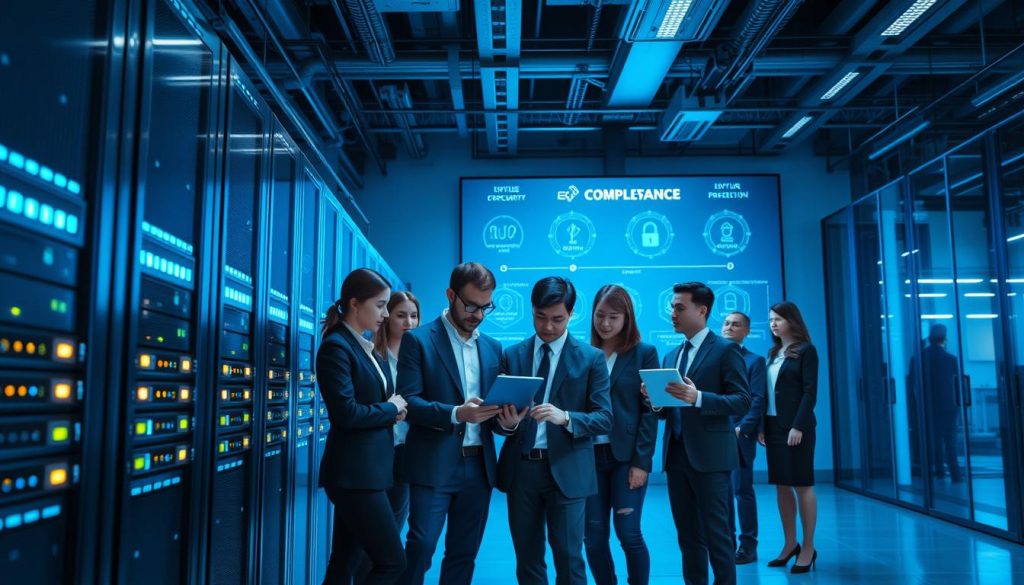
My priority is a defense plan that proves compliance at audit time. I build controls that protect sensitive records and show auditors the safeguards I use.
I enforce strict standards like HIPAA and SOC 2 to keep regulated data safe. These frameworks guide how I handle storage, transmission, and recovery so I meet legal requirements.
To reduce risk, I place sensitive workloads in a private cloud segment. This gives me tighter access control and clear separation from general workloads.
Meeting HIPAA and SOC Compliance
I rely on advanced security management to monitor all environments. Continuous monitoring detects anomalies fast and strengthens overall security.
- Role-based access ensures only authorized users reach protected systems.
- Encrypted storage and transit enforce strong protection for data at rest and in motion.
- Regular audits verify controls meet compliance requirements.
- Documented policies that support audits.
- Continuous monitoring and incident response.
- Segmentation that limits exposure of critical systems.
These steps help me keep systems compliant and protect my users. They also make compliance repeatable instead of reactive, so I can focus on running the business.
Optimizing Infrastructure Performance for Local Operations
I tune every part of my setup to keep local services fast and reliable. I rely on nearby partners to give me the technical support my business needs for day-to-day operations.
My hybrid cloud infrastructure is built to speed up applications and keep the network responsive. Private cloud technology hosts sensitive workloads so I maintain low latency for local users.
The local service team continually tests and tweaks my infrastructure. This ensures consistent performance and easier scaling when demand grows.
- Faster application response for local operations.
- Scalability that matches changing computing needs.
- Tailored solutions and on-site support for steady service.
By integrating hybrid cloud solutions with private systems, I keep performance steady across all my operations. That balance lets me focus on running the business while partners manage the technical details.
Strategic Management of Cloud and On-Premise Assets

I coordinate management of local hardware and external services to protect data and reduce waste. My approach keeps control where I need it and lets me scale other parts on demand.
Cost Optimization Strategies
I review usage monthly and shift workloads to lower-cost tiers when possible. Strategic resource allocation helps me lower costs while keeping security intact.
- I consolidate underused servers to cut overhead.
- I select services that match my performance needs, not the highest tier by default.
- I track billing trends to stop surprise charges before they hurt the budget.
Proactive Monitoring
My team of experts in Los Angeles runs continuous checks so systems rarely fail. Automated alerts and weekly reviews keep my data and security posture strong.
Resource Allocation
I assign compute and storage based on real requirements. This balance between on-site server capacity and remote services keeps my operations agile and costs predictable.
Leveraging Los Angeles Data Center Connectivity

I rely on a major Los Angeles data center to anchor my most critical projects. The ServerMania 22,000 sq. ft. facility gives me the network links and utility power I need.
The site’s proximity to the 1 Wilshire Meet‑Me‑Room gives direct, high-speed access to multiple providers. That access reduces latency for my users and improves application performance.
Why this matters:
- Reliable power: a 2.2MW utility capacity keeps my operations steady.
- Scalable infrastructure: I host servers there for demanding business applications.
- Broad network options: quick access to platforms and services that support my projects.
My cloud strategy depends on this provider to protect data and maintain uptime. With this connectivity, my content and services run consistently and my team gets local, dependable support.
Tailoring Technology Solutions to Business Requirements
My approach starts by matching technical options to the specific needs of each project. I work with my team to translate business goals into practical technology plans.
The result is a customized architecture that aligns infrastructure and management with real world requirements. This keeps my systems lean and focused on outcomes.
Customized Architecture Design
I choose hardware and a cloud platform that give the right mix of performance and scalability. That balance helps control costs while supporting peak demand.
Security and access controls are built in from day one. I configure management tools to protect sensitive data and information across the network.
- Aligns applications and servers to business needs.
- Optimizes options for cost and power.
- Improves access, monitoring, and incident management.
“A design that matches requirements makes support easier and users more productive.”
By tailoring solutions I deliver reliable services that let my users finish daily tasks with confidence.
Conclusion
I value a platform that delivers steady performance and makes management simpler today.
I choose options that give my business a clear mix of security and speed. These cloud solutions help me run apps with less overhead and fewer surprises.
Working with local experts keeps my server setup tuned and my services reliable. This hands-on support frees me to focus on growth while technical tasks stay in skilled hands.
Overall, the benefits are practical: better performance, easier management, and cost controls that protect margins. I recommend this path to any company that needs solid solutions in los angeles.